
Bowling Ball Head, Loosey Goosey Head, and Borderline Head
Treating Complex Cranial Lesions
CRANIOSACRAL THERAPY
2/23/20262 min read

Myodural Bridge Function and Cranial Base Release – CST Perspective
Role of the Myodural Bridge
The myodural bridge (MDB) links the deep suboccipital muscles to the cervical dura, helping stabilize the dural tube so it does not buckle, fold, or slacken with head and neck movement. When these muscles become tight, asymmetric, or overactive, abnormal tension can be transmitted to the dura and may contribute to headaches that radiate toward the temples, eyes, or forehead.
MDB, CSF Dynamics, and Symptoms
The MDB appears to contribute to cerebrospinal fluid (CSF) movement by transmitting rhythmic mechanical forces from suboccipital muscle activity into the dural system, functioning like a subtle pump for CSF circulation. When those muscles are in spasm, fatigued, or poorly coordinated, CSF flow around the cranio cervical junction can become reduced or irregular, and patients often describe pressure at the base of the skull, mental fogginess, dizziness, headaches with bending forward, and worsening symptoms during Valsalva, coughing, or rapid position changes—patterns that are consistent with MDB related dysfunction.
Proprioception, Oculomotor Control, and MDB Dysfunction
The MDB also participates in sensorimotor control by linking cervical proprioception with eye and head movement, balance mechanisms, and brainstem sensory processing. Disturbance in this system often coexists with chronic dizziness, motion sensitivity, visual convergence strain, vestibular mismatch, autonomic symptoms, upper cervical instability, and headaches that can follow concussion or whiplash, since traumatic loading of the cranio cervical junction frequently stresses the MDB and its associated musculature.
Mechanisms of Injury and Chronicity
Acceleration–deceleration injuries, sports impacts, repetitive micro strain, prolonged forward head posture, or long term protective muscle guarding can overload the MDB and its muscular attachments. Over time, this may lead to persistent or recurrent symptoms that respond poorly to standard approaches focused only on muscles, joints, or medications and do not address dural tension or cranio cervical mechanics.
CST Cranial Base Release Approach
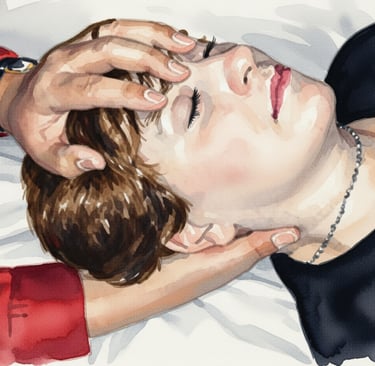
To improve MDB function and reduce headache and related symptoms, a craniosacral therapy (CST) protocol can be used that emphasizes cranial base work and CSF optimization. A typical sequence may include multiple prolonged CV4 type still points to encourage CSF function, followed by cranial base release; then balancing of the sphenoid and sphenobasilar synchondrosis; assessment and correction of maxillary dysfunction at the sphenoid; release of the vomer and ethmoid; followed by a second cranial base release and a final CV4 still point. This sequence aims to decompress the neurocranium from the Viscerocranium, improve cranio cervical alignment, enhance dural mobility, and support more efficient CSF flow, which can lessen referred pain into the head and face. Many individuals report a distinct sensation of decompression or lightness in the suboccipital region during or shortly after treatment.
Patients Who May Benefit
This MDB focused CST approach may be appropriate for patients with one or more of the following:
• Chronic cervicogenic headaches or “pressure” at the skull base.
• Migraines associated with neck tension or upper cervical stiffness.
• Dizziness, motion or visual sensitivity, or post concussion symptoms.
• Persistent brain fog, difficulty tolerating head movement, or visual strain.
• Suspected atlas/upper cervical instability, history of whiplash, or symptoms aggravated by poor posture, prolonged screen use, or looking down at phones.
Conclusion:
In individuals whose headaches or migraines have not responded adequately to typical medication based management, evaluation of the myodural bridge and a CST oriented cranial base release protocol may provide a useful missing component of care
Steve Heinrich PT